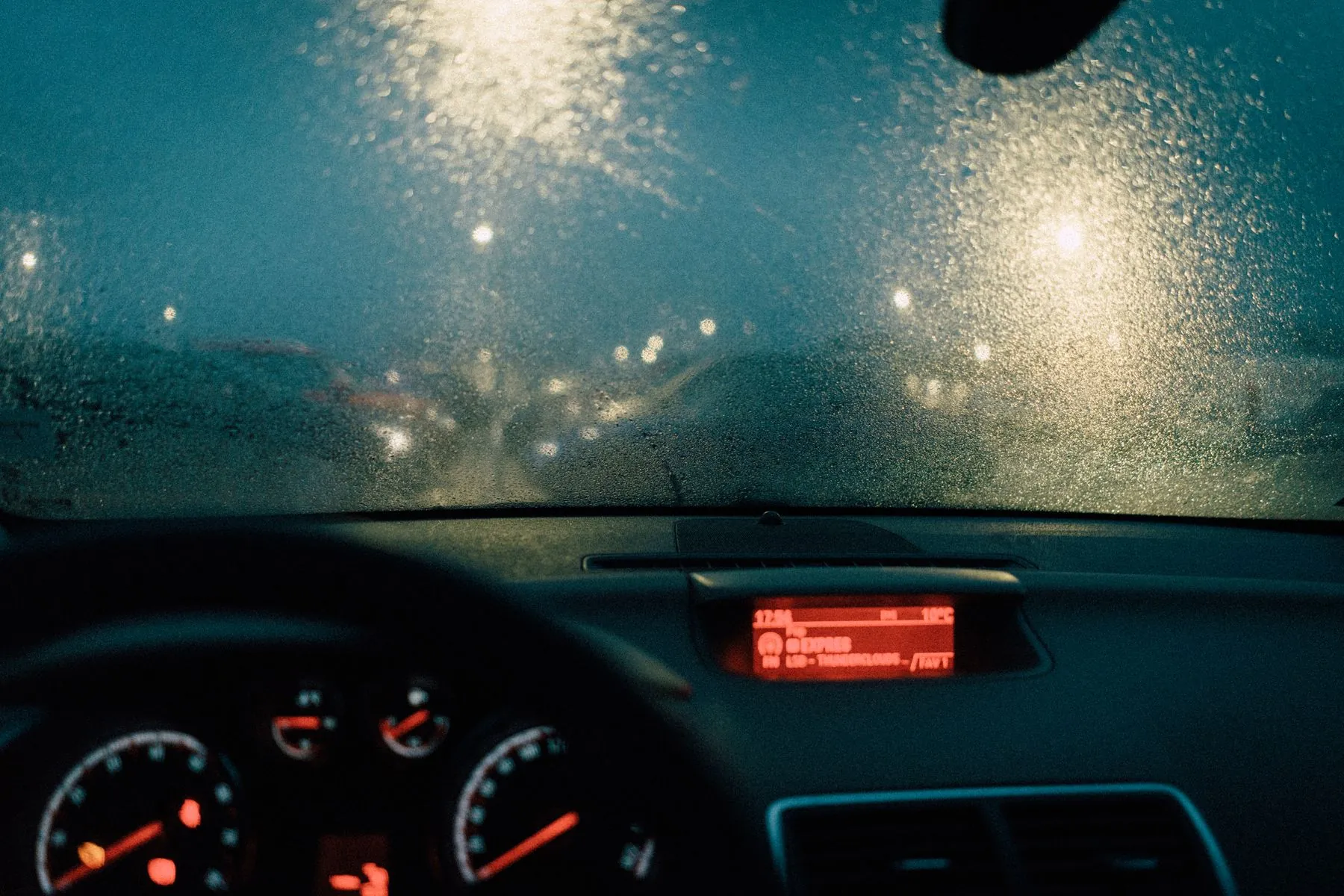
Rain is hard for human drivers, and it is hard for self-driving cars too — just in different ways. The trick is knowing which sensors to trust when the weather turns.
What rain does to each sensor
- Cameras lose contrast. Water on the lens smears the image, spray from other vehicles hides what is behind them, and wet tarmac turns headlights into long reflections that look like extra lane markings.
- Lidar picks up raindrops. Some laser pulses bounce off droplets instead of the road ahead, adding a haze of false points and shortening the useful range.
- Radar barely notices. Its radio waves pass through rain and spray, which is why it becomes the most reliable sensor in a storm — even though it sees far less detail.
Fusion: trusting the right sensor at the right time
A good driving system does not simply average its sensors. It tracks how confident each one is, moment to moment. When the cameras report blur and the lidar shows droplet noise, the system leans more heavily on radar for distance and speed — while still using whatever the cameras can confirm about what an object actually is.
Filtering helps too. Raindrops are tiny, short-lived and randomly placed; a car is large and moves smoothly. Perception models learn to drop points that behave like rain and keep points that behave like the world.
The safest response to reduced visibility is the same for a robot as for a person: slow down and leave more room.
Knowing when to be cautious
Even with fusion, heavy rain reduces how far ahead the car can see with confidence. So the planner adapts: lower speed, larger following distance, gentler braking on a slippery surface. If conditions fall below the limits the route was validated for, the vehicle hands over to its safety driver or pulls over somewhere safe and waits.
Cleaning matters as well. Production systems use small washer jets and air blowers to keep camera lenses and lidar windows clear, and raise an alert if a sensor stays blocked.
What this means for operators
Weather is one of the main reasons autonomy is rolled out route by route. A fleet might run driver-out in dry conditions first, then add night operation, then wet weather — each step backed by data from that route.